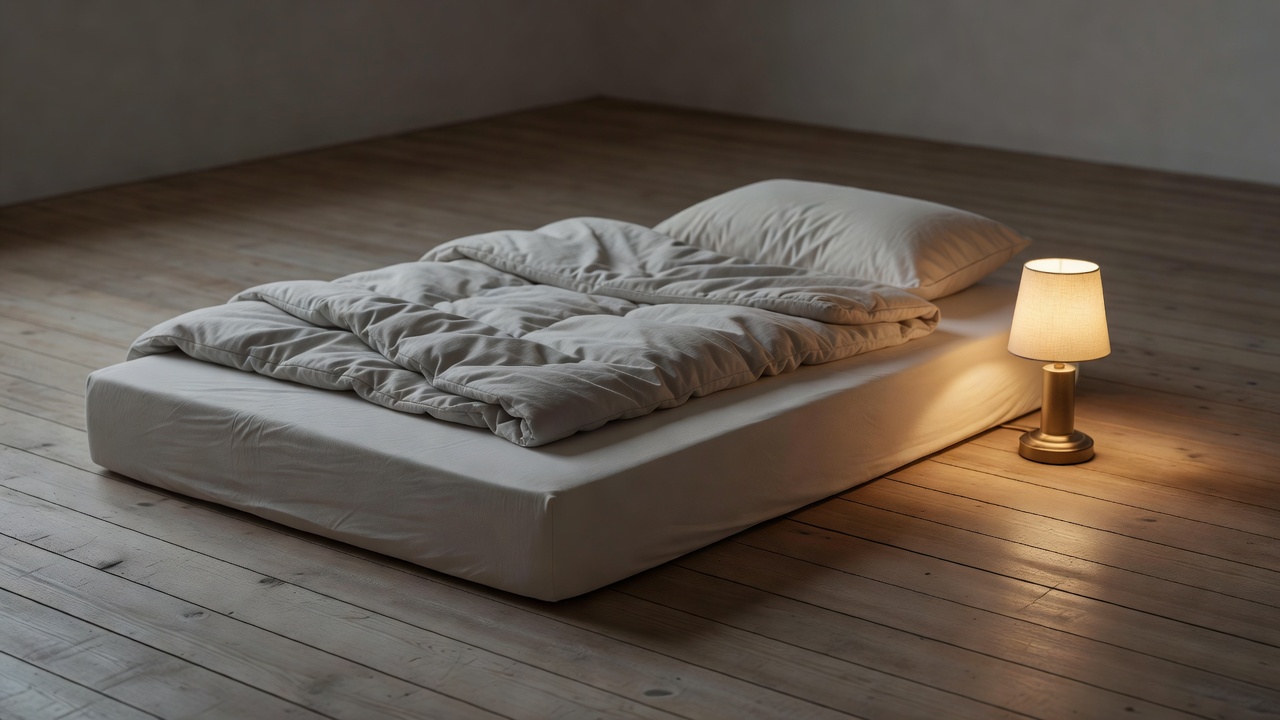
Stage four: settle
Sleeping in a half-empty house
The goal for the first night is small: a bed, a hot drink, a charged phone. Everything else can wait for the morning.
Step 01
The bag that stays with you
Pack this bag last and carry it yourself. It should never go on the van. When you walk through the door tired and hungry, it holds everything you would otherwise tear open twenty boxes to find.
- Kettle, two mugs, tea, milkA hot drink resets a long day.
- Bedding, pillows, a towel eachPacked in a clear bag so it is easy to spot.
- Chargers and an extension leadOne socket for four devices.
- Torch and spare bulbsOld fittings are often bare.
- Toilet roll, soap, toothbrushesThe three things shops are closed for.
- Snacks, water, a takeaway menuNo one cooks on the first night.
- Screwdriver, scissors, tape, bin bagsThe small tool set you will use all evening.
- Medication and important papersKeep these on you, not in the van.
Step 02
Beds before everything
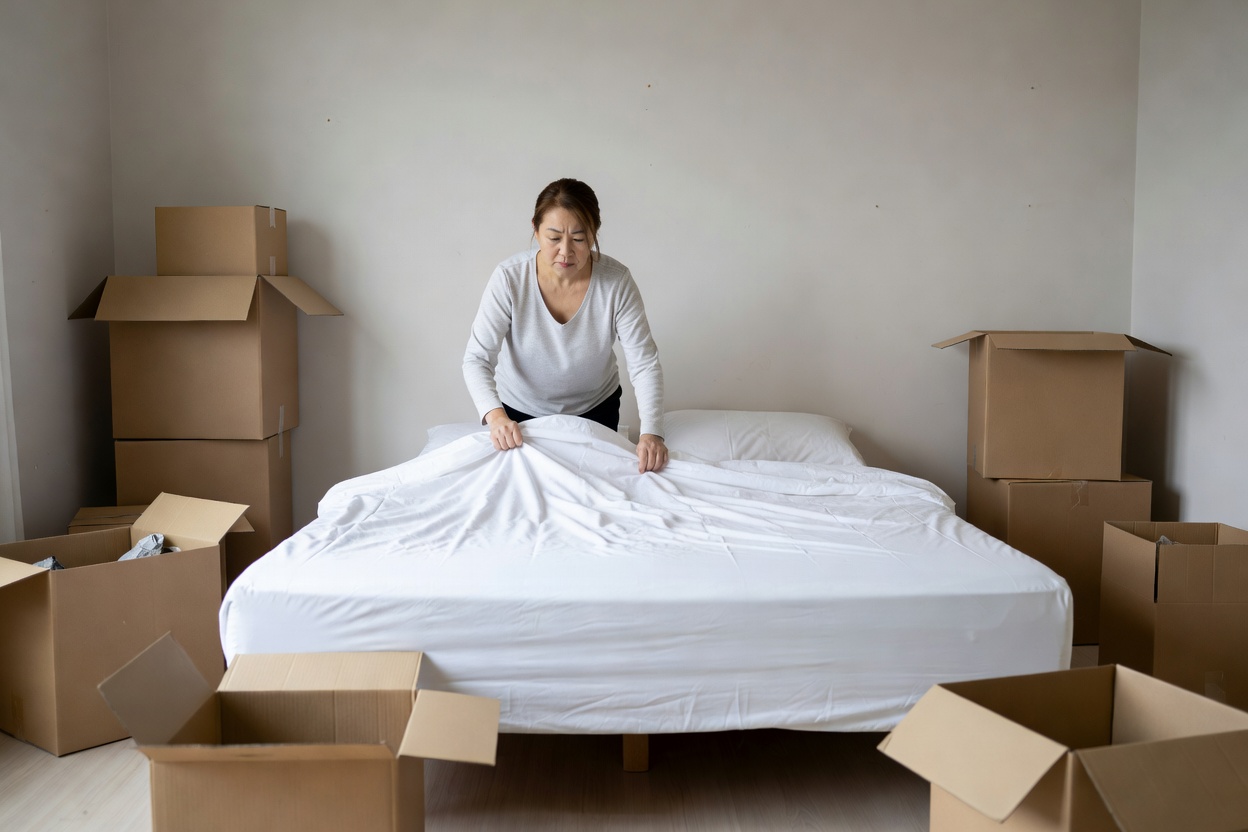
Build the beds first, even before the kettle. A tired person assembling a frame at midnight makes mistakes. Make each bed with the bedding from the bag, and hang a sheet, towel or temporary blind over any bare bedroom window.
If you have children, set up their room first and place one familiar toy within reach. If you have pets, give them a quiet room with their own bed and water, and keep the door shut while people go in and out.
Step 03
A kitchen in ten minutes
You do not need a kitchen yet; you need a corner. Find the box marked "Kitchen 1 – open first". Take out the kettle, mugs, a couple of plates, cutlery, a sharp knife and dish soap. Wipe one worktop and put these things on it. That is all.
Keep a roll of kitchen paper, a washing-up cloth and a bin bag within reach. Flatten boxes as you empty them, so the floor does not disappear again by bedtime.
- Box
- "Kitchen 1 – open first"
- Contains
- Kettle, 2 mugs, plates, cutlery, soap
- Time
- About ten minutes
Step 04
The first week, gently
Resist the urge to unpack everything at once. A sensible order is bedrooms, bathroom, kitchen, then the rest. One room per day is a good pace; one box at a time is a better one.
In the first days, learn where the stopcock, fuse box and meters are. Test the smoke alarms. If you notice a gas smell or anything unsafe with the boiler, leave it alone and call the gas emergency number or a Gas Safe registered engineer. Start the mail redirection and change your address with the bank, your employer and your doctor.
When the boxes are gone, you are home. If you want to share what is still on your mind, leave a move note, or read the questions people forget.